
Altered Carbon (the Japanese version) posits something not seen before: the complete division of the mind and the body – which seems to also be the secret to immortality.
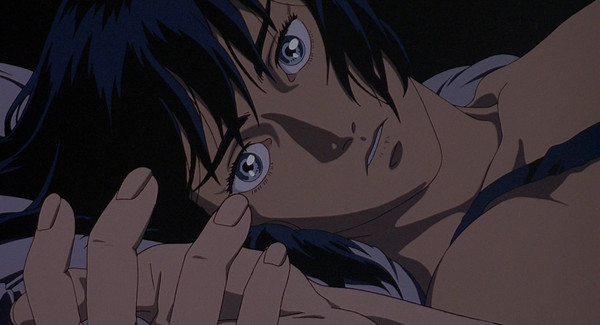
In Ghost in the Shell – except for a few individuals, like Major Motoko, with full cyborg bodies (shells) – most people in the world still have their own bodies and souls (Ghosts). Only their brains are enhanced by being cyberized, like having a powerful digital and electronic prosthetic, for the brain. You don’t need AI, if you can just use the creative benefits of a natural brain.
A cyberbrain is nowhere near as transferable as a stack – which is like the Ghost, of Altered Carbon: it holds the memories, the consciousness, the personality and the mind of the person.
In Altered Carbon, the stack – the soul, the Ghost, or the mind – is the only true marker of life. If the stack dies, only then does the person die – not when the body dies i.e. so-called “true death.” Isn’t a great deal of self-hood and identity tied to the body? Life isn’t an online role-playing game, where you can just change your avatar’s skin. Altered Carbon posits that the mind can live on, without the body, stored in the cloud or uploaded to a new sleeve (body), but what kind of existence would that be? I am not for or against; it is just a possible downside.
Have we already reached the limit of the body’s aging capacity, at 120 years or so? The rush to give up on the body has been at the heart of most major religions, for centuries. Only in the digital age can this neo-Platonic era desire finally inch closer to becoming a reality.
Regardless, Altered Carbon hypothesizes that immortality can be found in something medicine definitely cannot do yet: transplanting the brain from body to body, like a liver, a kidney or a heart.
The brain, in addition to the usually problems of genetic distance and immune rejection, has its own special considerations with the blood brain barrier and other central nervous tissues, such as the retina, the spinal cord and the cranial nerves, traveling the length of the body, and being decentralized throughout the body, not just confined to the head.
The brain in the vat experiment remains a figment of philosophy (Rene Descartes) – but since Source Code, and James Cameron’s Avatar, there hasn’t been a major fictional example of this thought experiment, until Altered Carbon: Resleeved.
If all of your consciousness gets uploaded to the cloud, why does destroying or damaging the stack equal “true death”? Memories must be the only thing in the cloud then, and the key essence of the person, his or her animating principle (soul) must only be able to be housed on the stack, not in the cloud or elsewhere.
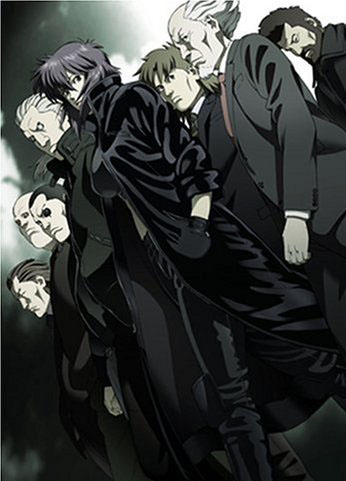
Where Ghost in the Shell succeeds is that it deals with the philosophical, and digital problems of a cybernetic life – false memories, people with two ghosts, one ghost with multiple bodies, ghost or cyberbrain hacking, hive minds over the Internet, viruses and worms (like Stuxnet) and military networks. Altered Carbon’s plot seems to only deal with the usual quandaries of organized crime and powerful conglomerates.
If your only choice was to die forever or be uploaded to the cloud and have a chance at being plugged into a new body, even a cyborg body, of course one would choose reanimation. However, living completely on the cloud (San Junipero), existing as a hologram or in a video game, without a body – as a young, healthy person – is definitely not the first choice or ideal.
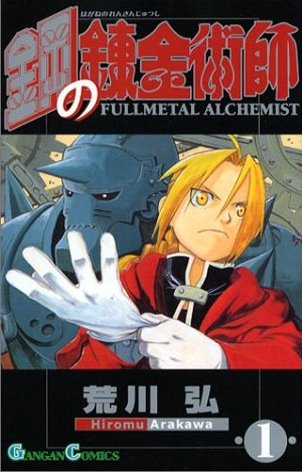
Look at Al, in Fullmetal Alchemist: he is stuck in the spirit world, beside the Gate, and he is like the steampunk version of having your soul stuck in the cloud. Yes, Al’s consciousness, in the physical world, is bonded to a suit of armor – a cyborg – but he desperately wants to get back to his real body. Such natural concerns cannot be so easily overcome.
Gravity’s Rainbow called organized religion the process of getting other people to die for you. Q: What would make a bunch of soldiers willing to die? A: The promise of being re-sleeved, of getting new bodies, from the spirit world or “heaven” – the cloud. Neoplatonic ideas, from the tail end of the Roman Empire and right after its demise, get a new life in cyberpunk probable future realities.
Usually these promises, of returning back from the dead, end with people coming back wrong – see, for example, the marionette army, animated by damaged souls, reaped by dark alchemy, in Fullmetal Alchemist – or the usual myths of vampires and zombies. The immortality potion, which creates zombies, in Kingdom, is another example. The myth of the undead super-soldier is not without major flaws.
 The clouds above were roiling and gray. The wind tore through the trees, ripping off small branches. An untethered, rotted tennis court net flapped in the wind. Alli walked across the leave-strewn hardcourt.
 A Piece, of the Sky
You must be logged in to post a comment.