10,000 Year-Old Scorpion

a good rocket for space a bad rocket for world destruction

There is a market value, pressure or a share for having all our media – film, video games and even books – start to look the same, like they all came out of a shared internet or digital machine. A valid point on the digitalization (and I would argue game-itization) of almost every aspect of our culture – ATMs, phone games – can be made. Almost every social network, from Facebook, to LinkedIn or Steam, edges you along with “achievements,” goals taken straight out of the world of gaming.

Web pages in Web 3.0 are starting to look alike, with the same slick interface straight out of the latest blog templates – just check out Tumblr, Blogger, Gmail (anything made by Google – search, etc.), Twitter, Pinterest, Storify, Instagram, Bing and the latest victim – LinkedIn.

There is talk of a technological singularity – which is very well possible. Instead of having a separate phone, tablet, music player, computer, game console and TV to sync every day, to the cloud (or worse, with cables) why not just have one portable, convenient gadget that does everything? There’s a market for that.

Consumers will pay for the convenience, the same way today people pay for the convenience of ready-made food (fast food) and ready-made computers and operating systems, that come with all the programs you want built-in, already installed.

It’s all about convenience – why do it yourself when you can just pay someone with the specialized knowledge or you can pay for a ready-made device or software that does it for you? I’m not making a right or wrong judgment here, just an observation on the way things seem to be going or the way they are.

Before that technological singularity, a media singularity will come first. Movies are adapted from books. Comic books and video games are made for and from movies. A video game can spawn comics, books and movies, in a media circularity that never ends. Through this process, all media forms will begin to look alike and borrow from each other, such that you no longer really have a piece of entertainment anymore – an individual film, book, video game, etc. – you have a franchise, a brand. This brand system already exists and has existed for centuries now (remember those advertising Mad Men in the 1950s?). It is simply exponentially faster with the new distribution pipes of the digital age.

You can deploy a brand into almost any kind of entertainment or medium and get the maximum amount of market share and the maximum amount of profit – so long as there is a desire for those products. It’s convenient. There’s a market share for that. Why have fans of a certain franchise or brand – say Star Trek, Taylor Swift (individual celebrities are brands too – hence why many artists go by one name, like Madonna) or Twilight – fantasize and write fan fictions about a movie when the movie/book/film/video game/soundtrack can be made for them and be available on their iPad/Smart TV/Xbox/Steam Big Screen/etc.?

The technological and media singularities reinforce each other and make for maximum convenience and therefore maximum profit. It just comes down to what people want. If people want convenience, products, goods and services are going to be made for that desire for convenience and they will be profitable because people want that convenience. If people don’t want those products, they won’t exist.

It’s a bit circular and chicken-and-egg, but this is how the “industries” – the film industry, the video game industry, the toy industry, the computer industry (Apple), the high-end “gamer” video card industry – all work: give the people what they want and make a profit off it. This is like the profit structure of World of Warcraft (although I disagree on whether video games can be used to ‘train’ people)

The moral, ethical and political questions then arise of “well should it work this way,” “could it work another way,” “would it work better another way” etc. or statements like “perhaps it works fine this way” and “it is morally and ethically right for it to work this way (people have the freedom to choose)”, etc. The better ethical, moral and political and economic questions should be concerning what people want and why they want it, and can people freely choose what they want.

That’s what’s at the heart of it, that’s what’s at stake. That’s how these products, services and trends are made. We can’t turn around and think that they appeared out of thin air. They weren’t made and foisted on us – at least not theoretically. No, what we’re getting – from the 1950s, the 1800s and perhaps longer than that – is what we want.

sony

Tankers and Feebs

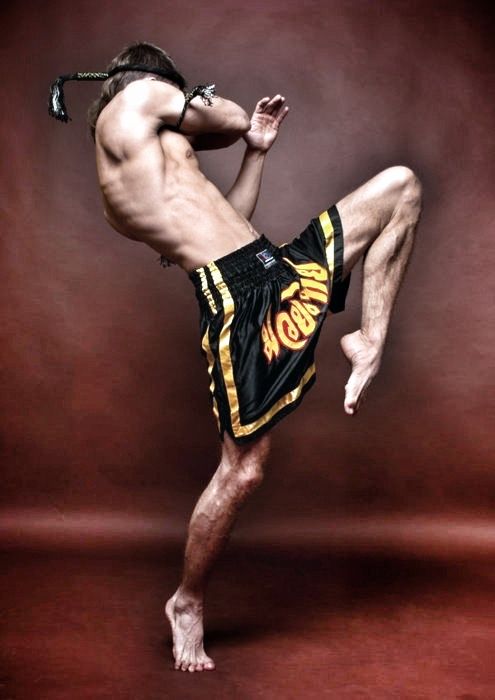
knee kick

Ran stood outside the hotel door, right at peep-hole height. Kaan opened the door, in a cashmere sweater and jeans, “You’re early.”

“Didn’t want you to brood,” Ran said, “Ferment in your own brine.”

“Was I interrupting anything?” Kaan asked.

“No,” Ran answered, “Alli went up to her parents’ house this afternoon. I was left with nothing to do, on a rainy evening.”

Kaan waved Ran in and closed the door, “She didn’t take you?”

“Well, we did just meet,” Ran said, taking in the room, glancing at the chefs on the television set.

Kaan opened the ice bucket and fixed them both two fingers of Fireball whiskey. They sat on the couch.

“How is Beth?” Ran wondered.

“She’s fine,” Kaan said, “She likes the cabin, and Maine. I admit, I’m shocked.”

“Yes, she was always more of a city girl,” Ran said, sipping her whiskey, “She studied literature in NYU. We were in the same Creative Writing classes together. We were the brat pack, with our first books published right out of college.”

“Wow, I wouldn’t have guessed,” Kaan said, impressed.

“You wouldn’t have put it past her, would you?” Ran grinned.

“No, no, I’m not that mean,” Kaan laughed.

Ran drank the rest of her whiskey and got up, “Come on, let’s get out of here.”

Kaan also stood up, “Yes, let’s. I’ve festered in here long enough.”

Out on the city streets, a light drizzle was falling. They caught a cab going Downtown, to Labyrinth.

It was Leather Night at the club. The place was packed with party-goers in black leather jackets and black leather police caps. Kaan and Ran were in the minority, wearing gray and navy-blue blazers, respectively.

At the bar, they ordered margaritas. Ran chewed on her slice of lime. On the stage, a chain-link fence and metal posts had been erected around an octagon. Two amateur female MMA fighters were going at it in a cage fight. The mosh pit of spectators roared their various notes of satisfaction or dissatisfaction.

“Alli’s been through a great deal,” Kaan began, “Are you going to do right by her?”

“Of course! I would, but -” Ran cut herself off.

“What?” Kaan asked, sitting up.

Ran turned to her, “She’s stuck on someone else.”

“Who?” Kaan demanded, and then closed her eyes, “Oh.”

“We look alike apparently,” Ran said, “She is with me, but her mind – her spirit – is obviously elsewhere.”

Kaan fidgeted, “Well, they were together in high school. First loves and all.”

“So, I’m the repeat,” Ran said, “I don’t know whether to be perturbed or flattered.”

“It is possible to hold two competing ideas in your mind, at the same time,” Kaan shrugged, taking a sip of her drink.

“Like her!” Ran said, spreading her hands wide, “Why do I feel like the cuckold here?”

Kaan gave her a look, “I don’t think you should.”

A swift kick to the face brought one of the contenders down. She did not get up. The other fighter stood over the fallen foe in victory, for a moment, before being pushed out of the way by the ref.

“Do you think that some of them throw fights, for gangs or whatever?” Ran said, facing the cage on her stool.

“Sure,” Kaan said, “I wouldn’t be surprised.”

Ran looked back at Kaan, “Do you think people throw relationships too?”

The corners of Kaan’s smirk turned down a few notches, “C’mon Ran. I imagined you to be a tougher soul than this.”

Ran looked back at the scene in the ring. The cadre of the two fighters were yelling at each other, as paramedics pulled the flattened fighter off the mat. The crowd in the pit ate it up, screaming for more.

Neo-Tokyo_Akira

Music:

Saint-Saens – Samson et Dalila, “Mon cœur s’ouvre à ta voix”