
Zombies tend to operate using a rudimentary hive mind. The individual zombies aren’t smart, but the virus’s collective unconscious is – like a kudzu creeping vine or a mold colony – or the Mind Flayer, in Season 2, of Stranger Things. Misidentification of the zombies as simply expired or as having rabies, Ebola, Mad Cow Disease (vCJD), the flu, a cold or some other real disease, commonly happens at the beginning of many stories. One extreme countermeasure, from World War Z, the book, is the nerve gas witch test. If you die from a sarin attack, you were human; if not, you’re obviously a zombie.
Panic and poor governance lead to a zombie dystopia. A zombie can’t feel pain and has no sense of self-preservation – so, it’s definitely a monster. In fiction, there is also the sliding scale of cold temperatures helping or hurting the zombies. The right amount of cold, acts as cryogenesis, and preserves the zombies, allowing them to keep running around, instead of decomposing faster. Too much cold will just freeze a zombie solid.
Minecraft-style zombies run around, on the ocean floor or taiga and tundra areas, where they can’t freeze. Resurfaced zombies or zombies that are about to thaw, remain a threat – mimicking real-life frogs that can be frozen and still be alive, once they are warmed up. You can only be warm and dead, not cold and dead, in medicine. Worldwide disaster creates cursed zones, contaminated by chemical or radioactive waste or overrun by infected zombies. This state of affairs can be further complicated by a nuclear winter or a new ice age.
They break all the rules. Werewolves and vampires and mummies and giant sharks, you have to go look for them. My attitude is if you go looking for them, no sympathy. But zombies come to you. Zombies don’t act like a predator; they act like a virus, and that is the core of my terror. A predator is intelligent by nature and knows not to over-hunt its feeding ground. A virus will just continue to spread, infect and consume, no matter what happens. It’s the mindlessness behind it.
World War Z author, Max Brooks, on why zombies are different
I shall consume…I shall consume everything…
The Majora’s Mask moon
Zombies lack of rational thought makes them more like a force of nature, than an individualized, atomized, intelligent force. They’re more like a hurricane or a flu pandemic, than a wolf or a tiger. Zombies are like the scientific version of ghouls, rakshasa, djinn and daemons. Vampires are like the middle way-point, between god or demigod-like daemon and Fair Folk – and mindless zombies. Zombies rising from the ocean floor or being unfrozen or thawed out, in the colder regions, brings to mind climate change, whether human-made or natural (like in Kingdom).
Rising and plummeting temperatures contribute to the viability and spread of diseases, stymieing some pathogens and allowing others to jump to new environments. The dichotomy: zombies are like a parasitic hive mind, constantly and relentlessly hunting for hosts. Vampires are more like half-infected survivors, holed up in various strongholds or bunkers. Zombies roam the streets aimlessly, until they run into their prey; vampires remain in their castle, unless they’re hunting – in which they are more like a normal predator, with a clearly defined hunting ground (distance decay) – town, graveyard, etc.
The main marker of human behavior is symbolic thought and appropriate grieving. This is why zombies are so unnerving. They present the breakdown of basic humanity – being able to recognize fellow human beings as people – not food and being able to recognize the importance of those who have passed away. When those tenets are violated, you get zombies.
A related fictional species includes mutant mega-espers, whose powers can reach the level of djinn and demigods. They can possess abilities like time travel and controlling the earth’s magnetic poles, the planet’s electromagnetic field. The presentation is usually as a giant, psychic Eldritch monster esper, a god, a mutated, ancient alchemist or a djinn, from the beyond (Watchmen, Lost, Akira, Ghostbusters, Stranger Things, Raiders of the Lost Ark, the Mother series). A Lovecraftian quantum being, from the astral plane, breaks out, into the physical world.
Where such a super-organism falls, on the Other Side spirit being to alien from another quantum dimension continuum, depends on the genre. Expect to see pools of qi life-force power, fired as energy projectiles. X-Men and Stranger Things have many parallels. The X-Men story arc is definitely the saddest, of all superhero arcs – following the dark side of history, from WWII, until the ’90s. Still, it’s an important story to tell. Not all superhero stories get to be happy or funny. X-Men always felt more real to me; I liked Dark Phoenix.
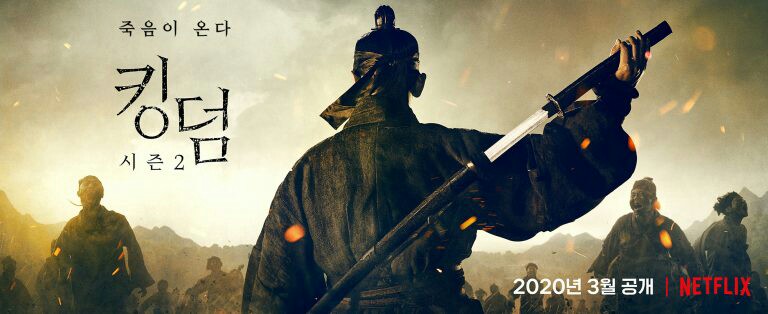
What I like about Kingdom is that it threads the needle, between zombies and vampirism. That needle is people always looking for ways to reverse or stall aging, including cryogenesis. From alchemy, to Frankenstein, most problems start with some black magic or scientific way to turn back the body’s clock, find immortality or revive the dead. Vampires are notoriously ageless, if not immortal. They seek fresh blood (plasma) to remain young forever and not return back to being dried-up corpses – that turn to dust, in the sun.
Zombies are fictional proof, that all efforts to bring the dead back or artificially extend life, with weird potions or blood sacrifice, almost always end up with the dead coming back as ravenous, rabid cannibals. Hence the quandary of medicine remains the same, as it has been, since ancient times. Unless someone has a leg up, genetically, or otherwise, aging is almost always associated with greater morbidity and mortality. However, efforts to reverse or stop aging or check death, almost never work out as planned.
Addressing aging and extending human lifespans are the next step in human evolution (transhumanism) and improving the standard of living, worldwide. However, for the more exotic practices, reward will never completely eclipse the great risks that are always involved with altering genes and blood proteins. Every good thing must be done in moderation, with the appropriate medical safety measures in place.
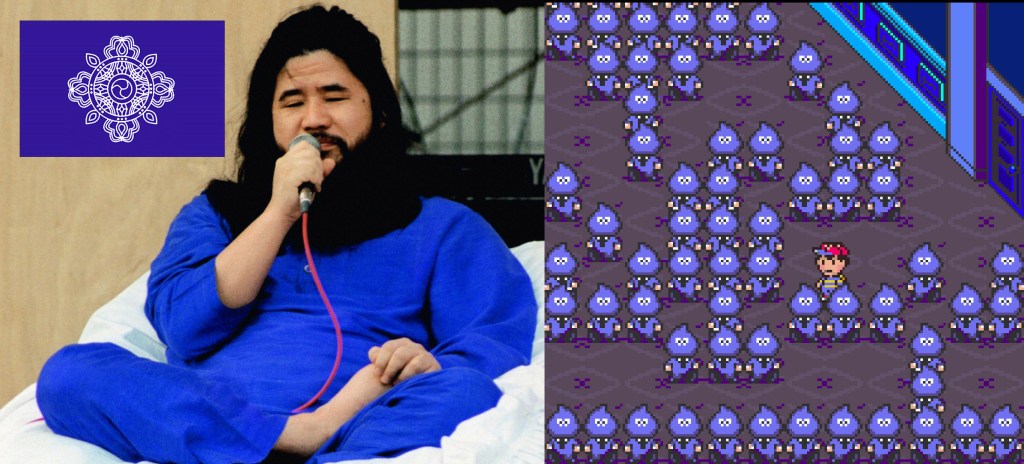
The true virus health crisis is people refusing to vaccinate their kids, in the U.S. – while believing misinformation, like the moon landing is fake and the earth is flat. That’s where an outbreak can come from. Goop is just pandering to those who feel failed by modern healthcare. The show is harmless – except for that one huge sticking point. Science is the ONLY way of knowing. Everything subjective either becomes objective or becomes useless – and falls off by the wayside.
I don’t really care about Goop itself, but it’s not good to tempt people with this way of thinking. That’s how cults get started. Even professional magic is based on optical illusions and someone knowing more about science or how to use science in a way that most people aren’t readily aware of. Evidence-based medical care is the best way to find healing and therapeutic treatment. If you don’t trust Big Pharma, at least read the scientific journals for yourself. You deserve decades of science, not snake oil.
The most vulnerable people – those who feel wronged by modern healthcare – are being recruited to be test dummies and lab rats for potentially dangerous experiments (microdosing, extreme cold shocks), that almost no respectable medical personnel would ever touch. The already vulnerable are being exploited, using their pain as bait, just to test a curiosity. However, I am glad a discussion on the potential harm of pseudoscience was conducted, by the public. I am not against interesting ideas, in fiction – but fictions should be clearly marked as such, not marketed as pretty much peer-reviewed science.
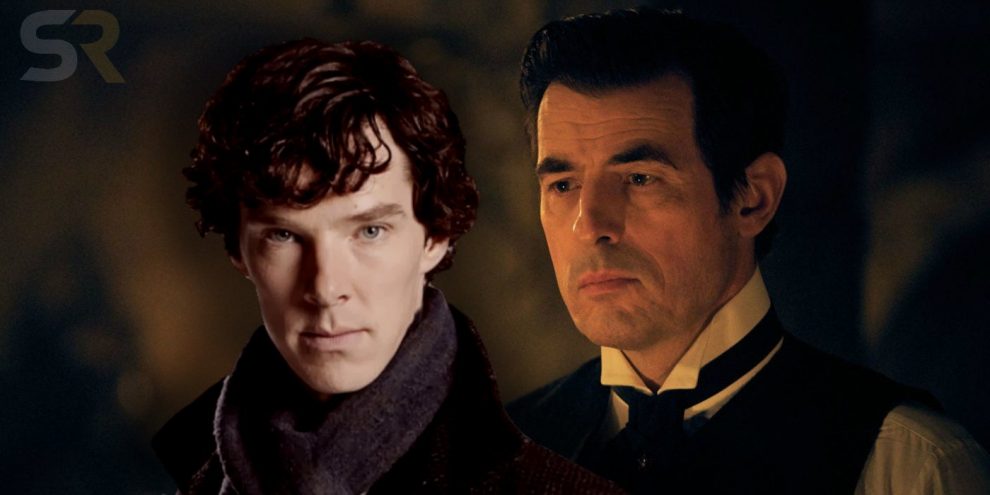
It is not correct to describe Dracula as bisexual: “He’s bi-homicidal, it’s not the same thing. He’s killing them, not dating them.
Steven Moffat, the creative juggernaut behind Sherlock, London Spy and Dracula
He posits a key distinction; Dracula may be attracted to both sexes, but he is still a vampire. He doesn’t love, the same way like how humans love. Dracula is not interested in keeping his lovers alive – similar to how a zombie cannot comprehend not eating loved ones who have passed away – or those who are still living, for that matter. It’s fictional vampire and zombie “science.” Dracula leads his lovers to their deaths, by drinking in all of their lifeblood (plasma), through his IV-like teeth. He’s like a supernatural unsub (serial killer). That is how I have always seen vampires as.
The continuum is 1) zombies – hive mind to mindless, 2) werewolves – also ferocious, but are at least as smart as predatory pack animals, to 3) vampires – essentially a human predator, with supernatural or viral-enhanced abilities. That is the supernatural ranking system. Studies of unsubs and forensic and behavioral science show that most unsubs focus on targeting whatever sex their love interest is. For the fictional Dracula, it is both, as Moffat points out.
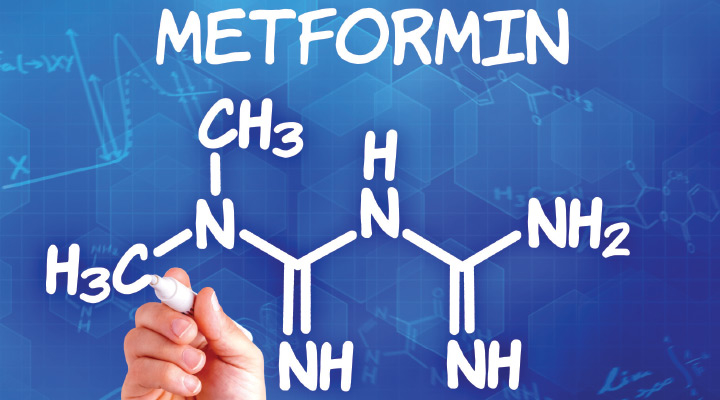
The main point, however, isn’t sexuality, but fictional, in-universe “science.” Dracula feeds on the blood of men and women and becomes young and beautiful again. He is an evil “scientist” who has found the fountain – the Holy Grail (Sangreal) – of everlasting youth, the elixir of immortality. Dracula is a parasite that becomes stronger, while his host grows more and more ill, and dies, thus spreading his “disease.” The power is in the blood: antibodies, proteins, genetics, genealogy. The ones who retain the lion’s share of their humanity, have either special antibodies or genes or both. They become the new symbiotic carriers, thus creating a new subspecies.
If Harker revives, he must be Dracula’s “husband” – partially immune, like the vampire’s three already-turned brides. Harker has a horrible experience in Dracula’s torture chamber and runs and tells the nuns about it (Van Helsing, Gabriel). Harker does NOT want to be Dracula’s husband – but vampires can’t kill themselves, so Harker invites Dracula in, to find a cure. The nuns are not as immune as Harker.
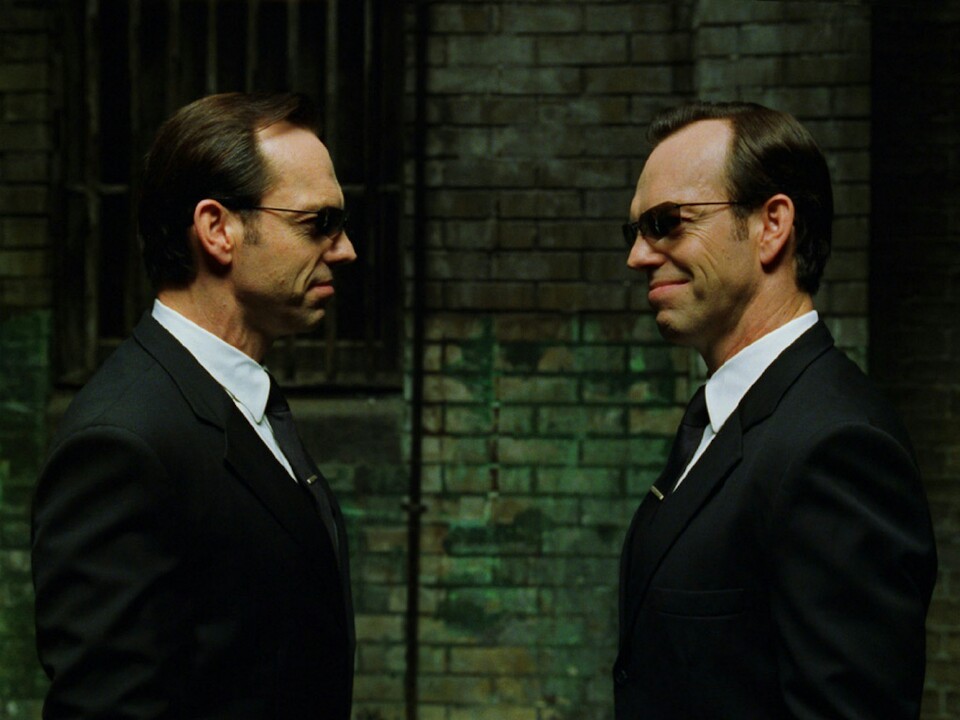
Dracula plans a mission to spread his psychic vampire virus to Victorian Era London. He preps an obvious plague ship. Dracula jumps in his time capsule and survives the failure of that plan. Pretty much immortal, like those of his kind, in Interview with the Vampire, Dracula, the original blood virus vessel, emerges about a century and two decades later. Blood acts as a set of genetic memories – a bloodline – like in Assassin’s Creed. Vampirism is the immortality virus. The vampire archetype, fears death – and life – while being balanced, like a pendulum, between both.
This is the current state of zombies and vampires, as fictional phenomena, embodying deeply ingrained human fears and anxieties, about isolation, hyper-connection and infectious disease. The zombie, with its horde and its hive mind, is too connected. The vampire, who fears the ultimate loss of identity – death – stalks around, alone at night or is otherwise holed up in an impenetrable fortress. The vampire spreads its wings at night; it says, ‘I wish to spread my disease.’ – while the human being says, ‘I want my lover (or loved one) to live.’
 A Piece, of the Sky
You must be logged in to post a comment.