
This is a Story About a Woman Called Yumeko…

Midari and Yumeko

Yumeko understood Midari (Russian roulette, Zener ESP card deck), who lost a pretty ugly bet to Kirari. Most people write Midari off. I even wrote Midari, off at one point. I feel guilty about that now. But Midari has a good heart. She saved Yumeko, in Ep. 4, of Season 1, and she didn’t want Yumeko to face Kirari and endure the same fate she did.

Basically, if the Debt Swap game was about wrongs committed in between the genders, then the episodes about poor Midari’s story are about wrongs that women commit against each other. Obviously, however, there is no perfect world.

Midari and Yumeko are similar, but not the same. Midari is formidable because she has less fear, making her immune to several motivations most people have. Midari is a genius, a gambling One Punch Man. However, the weak side is sadness and ennui. Thus, her motivation to feel something, with the things most people fear most, is an uncommon motivation – but still a motivation.

Yumeko was able to exploit this. If a person has one motivation, once that motivation is figured out – however obscure that motivation is – their moves become predictable and the game has no risk. Hence why Yumeko became truly upset because the ESP game wasn’t gambling. Yumeko hated that Midari’s game had no risk, because even with scams, Midari rigged it so that she would lose.

0% or 100% probability are not your friends. If you eliminate all risk, even at the last second, you lose all reward. A world without risk is a world without change: a perfect world, but also a dead and frozen one.

To the uninitiated – compared to someone like Mary – Midari and Yumeko might as well be the same. I like Midari and Yumeko. I like that they don’t hold back their feelings of pleasure. They claim them and own them. You can afford to have a lot of fan service if the story is strong. Yumeko is empowered, and everything she does is consensual. She is happy and having fun with her life, naturally. That makes an enormous difference; that’s the difference, not the fan service itself

Kakegurui is so sexualized, that it’s funny. It’s fan service and it’s funny spicing up a show that would normally bore most people with probabilities and gambling math. It’s also sex positive. The women are owning their own sexuality. You can tell; there is a difference. All of this also fits with Yumeko’s confident, take no prisoners mentality.

1) Strong women owning their sexuality is good, like I said. 2) If done tastefully, and subtly (or in an obviously absurd way, like Kakegurui does), not all fan service is bad; some of it is fun. 3) Spicing the more theoretical gambling parts up, with desire, makes sense.

How are Midari and Yumeko different? Midari constantly always focuses on the end result – which is better than most people – but Yumeko also is concerned with the probabilities to get to the result. This is the mark of a true gambler.

Following the dual theme of each episode, Yumeko and Mary both end up separately being the Woman that Refused (more Yumary shipping). Midari tried to protect Yumeko from the darkness of Kirari – who is dark, (except for when it comes to Sayaka and Batsubami) – but Yumeko is strong enough to face Kirari on her own. Midari was just trying to protect Yumeko from Kirari.

Every game has had a scam in it and Yumeko easily sees through the scam and wins or ties, under both the constraints of the game and the scam. Yumeko is fiery. Plus, you don’t get enough genius or gambler female characters. Yumeko never underestimates anybody. That’s her real secret to winning.

I just wanted to see the hand in the $100M betting war. Three of a kind, jacks. An amazing game. I love poker, so I understand a little bit how Yumeko feels, how risk – and reward -excite her. Yumeko’s hand wasn’t even a full house – but she just needed it to be stronger than a 3 of eights. Nice.

Yumeko didn’t even need the Opposite Day twist to win; she won with the normal hand rankings of poker. Manyuda doubled down on just having the right to choose. He should have folded. When he chose to play with the normal hand ascendancy, he still lost, to a middle tier hand.
A Donation of Sense

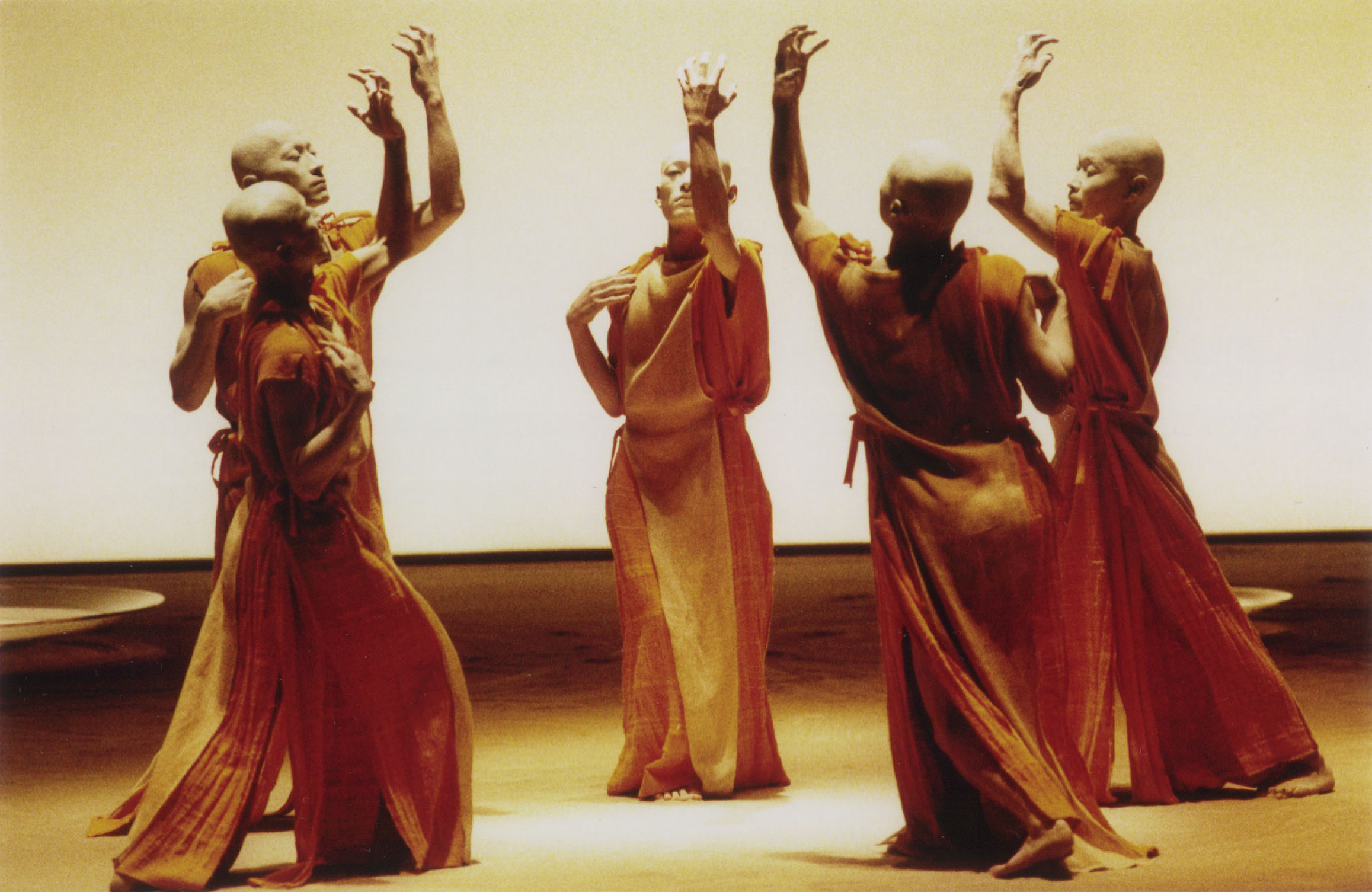
hibiki_saka_gunbu2

An instance of denotation, manifestation and signification failing to support sense, is Alice losing her name.[1a] Alice loses the name that denotes and signifies her. Hence, sense is separated from the three dimensions of proposition. There is a regressive denoting of further senses.[2a]  From Latin, and later, French – doner, donnes – comes the English word, “donate.” We are donated the “givens” in a problem. [3a] The problem preexists the answer. Alea, a game of chance,[4a] runs on lack and excess. There are no Ideal Forms, only forms, casts, events – points, sets, series, pips on a die. You have sets and series, with lack and excess moving between two sets.

In an identity, x = x. Sets hold various identities, including limits and singularities, placeholders, like zero. A singularity is a point or a non-point, like the eye of a storm or the center of a whorl of hair. In physics, black holes are singularities, rips in space-time. You could say singularities are points of pure becoming. A singularity is another point in a set; a point has zero dimensions.[1] Humpty Dumpty, an egg, has no organs; he is made of singularities instead. He lacks identity.

In losing her name, Alice gives off her incorporeal double. Doubles involve two entities going in two directions and good sense. There are the doubles, Tweedle-dee and Tweedledum, the Hare and the Hatter, but also the liminal in between. We have the Stoics’ Chrysippus effect and the law of the excluded middle, the infinite set, the limit and the convergence toward a limit. In the present, is the event, a point connecting to the infinite line of Aion, the ideal game, a line on a flat surface, the width, a frontier. The zero, the empty space, a floating signifier, is the ‘something,’ the aliquid, between the two sets. This given, in the problem preexisting answers, is the doner, the donation, between the two sets. Sense is that donation, the given – ‘that’s a given.’

Sense is the empty square between the two sets, the two series. Lack and excess define the two series, and the singularity is the event that provides coordination between the two sets. There are two sets, the signified and the signifying.

In the opposition between the surface and depths, the surface, the membrane between bodies and words, things and propositions, begins to break down and have holes. The body is a cavity with a broken surface; it is porous, with little holes. If there were no separation between propositions and things, words would enter bodies. Of course, this is not the case. In the world of depth, bodies are penetrated by other bodies, mixtures – this is a wound. On the other side, in a separate set, is sense, the event, an incorporeal effect, a surface effect. The surface effect, the pure ideal game is set apart; words are set aside from bodies.[2]

There is also the organism without organs, a body without organs, an egg, like Humpty Dumpty, or an embryo with undifferentiated organs, or a zygote with poles of cells, thresholds of potential. On the zygote are the animal and vegetative poles, active and passive poles of cells. The egg and Humpty Dumpty are points, singularities. They take in both sets of aspects – that of bodies but also skins, peelings, surface effects, events, sense – a body but a body without smaller, internal bodies, encased in membranes: a body without organs.

In the egg, this body without organs, there is no surface, no frontier, no difference or differentiation. The fish become a part of the sea, thus alluding to Humpty Dumpty’s poem including fish.[3] Are the fish apart of the sea or are they separate bodies? In this body without organs, between surface and depth, words enter bodies. Fire, water and air, classical elements, combine. Body and words become one – a strange amalgamation, like the portmanteau word.

Hecate is the goddess of the crossroads, the liminal and facing three ways. Circe, is an expression of Hecate, who is also the goddess of the moon. Circe turned the lotus eaters into pigs, a moment of pure becoming. There are lost pigs and other animals on Peter Pan’s island. Hecate and the nocturnal, connect to seemingly nonsense words: “lost pigs of the moon.”[4] Water and fire, classical elements, combine again. The combination of opposites points to the duality of the body: the fragmented body with separate organs and the body without organs. Peter Pan releases his shadow; both Peter Pan and Alice release their incorporeal doubles.

There is a difference between the nonsense of the surface and the two series, and the nonsense below sense and the surface, the nonsense of the depths, when the two series collapse into one. Sense slides along the surface width, between the two sets of signified and signifying. Meanwhile, there is no surface or difference between continuous bodies surrounded by their surface membranes, only depth. The lotus eaters are the nexus, the connection, between pigs and eating. Eating entails a digestive track from end to end, a tube, a hole, a tunnel, a surface of epithelium, running through the body, continuous with its surface; skin on the outside and the meeting of internal and external, inside and outside – one giant surface, running through a depth.[5]

Sense is the bi-directional line, like Aion, the divider between language and the body, protecting the body from language – when words pierce bodies, a wounding. Sense is the barrier, the mirror, keeping words, the incorporeal, proper names – and the body, bodies, the depths, separate. Sense is a singularity, an empty square, a supernumerary zero, moving between the two series of propositions and things, eating and speaking. There are two series, the body versus language and words.

Telescoping, Aion and Alice are unfolding, along an infinite line. Common sense, identity, is being eroded. The body goes back to being an egg, an undifferentiated body without organs. Doubles and doppelgangers appear in tandem – Hatter, Hare; Tweedle-dee, Tweedledum. The nonsense of depth is pitted against the nonsense of the surface.[6] The nonsense of depth, is corporeal; there is no surface or frontier – words pierce bodies and wound them. The surface collapses, pierced with many holes; it is porous.

The nonsense of the surface is the logic of sense, language, the incorporeal, the surface, the dividing line between the two series of language and bodies. The surface is like the surface of a body of water – it is easily pierced. Bodies pierce mixtures, producing surface effects, ripples. Sense is produced on the surface; when the surface collapses, sense collapses.

Sense is produced at the intersection of identity and direction. Sense doesn’t say its own sense – like nonsense – it further denotes in a serialization: n1, n2, n3; infinite regression, eternal return. Sense is the surface between words and bodies. A surface and the liminal space before it, are indivisible; they are two sides to one whole, like two-faced Janus: a double causality. There are two forms: the general and the individual, two perspectives,[7] surface versus depth. There are two series of singularities, with empty square and esoteric words, circulating between objects and words, bodies and language, signified and signifying.

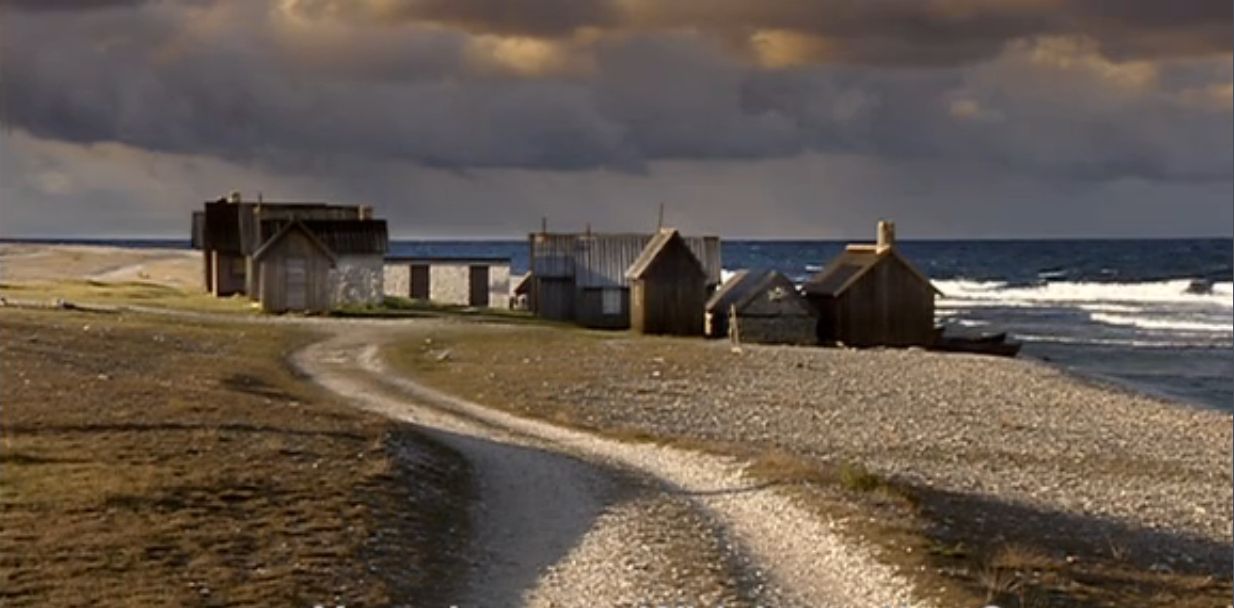
Faro

[1a] The Logic of Sense, 18.

[2a] Ibid 31.

[3a] Ibid 55.

[4a] Ibid 58.

[1] Ibid. 80.

[2] Ibid 87.

[3] Ibid 89.

[4] Ibid 90.

[5] Ibid 91

[6] Ibid 92.

[7] Ibid 99.