Hologram Love

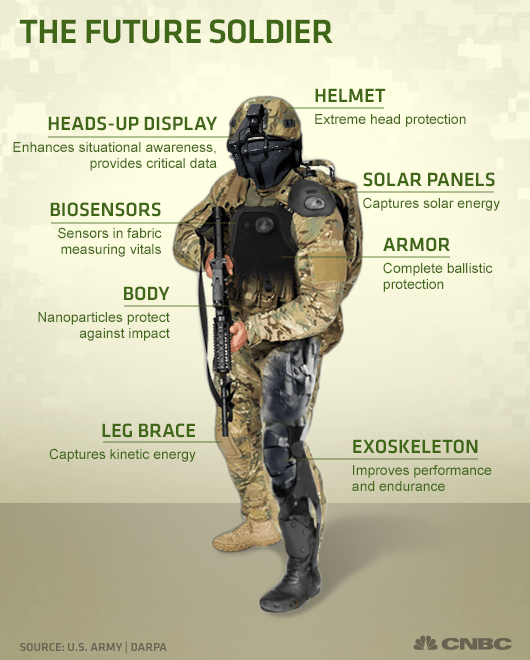
“My Holo Love” is really good; this show is everything I was talking about, in my last post: augmented reality, Google glass/smart glasses, driverless cars, smart homes and the Internet of things.

Holograms marry advancements in AI, since the widespread use of digital personal assistants, like Siri and Alexa, with augmented reality, already in some video game systems, phones and virtual reality headsets. 

The show is about a hologram digital personal assistant, that works through a smart glasses, that passed the Turing Test, developed by Alan Turing, in 1950. Turing helped break the German Enigma code, during WWII.

This hologram AI can also drive digitally-enhanced cars, operate smart homes and telephone land lines, and smart TVs. However, it’s not hard to see an evil version of this AI being hacked to become some kind of Skynet, HAL 9000 or Eagle Eye, that can use the power grid, power lines and the Internet of things against unsuspecting people.

Also, the AI, in the TV show, isn’t a perfect AI. It’s so human-like because it’s based on its still living creator, who lives in a lab, underscoring that there are still many things robots and AI can’t do. Other AI cultural touchstones referenced: Chobits and of course, the Spike Jonze film “Her.”


Here is what is available now – not in the near future – now: the technology to mine a nation’s cellphone network has been around for at least two decades.

In the early days of cell phone networks, agencies, such as the FBI and the NSA, perfected surveillance and data-gathering practices, that are still in use today, to police protests and track down criminals.

A historical tipping point was the growth of cell phone networks, in the early 2000s. The market for cell phones was mushrooming, at an exponential rate. Back then planes were developed that could log into cell phone towers, while still in the air. Every cell phone, in the midst of a call, could be scanned, and singular calls could be separated out, with accurate locations, attached to them.

An individual could carry a sensor, that could be encoded, to detect only a certain cell phone number – even if the cell phone was off. Someone could secretly power-on a phone that had already been turned off, by its owner – and then use the cell phone’s microphone, to broadcast everything and anything, in its range.

A single person can re-image several computer drives, at one time; with a fresh battery and SIM card, it is possible to clone cell phones – even without the original phone – and employ them as dummy clients, that can send and receive text messages, like the real cell phone owner.

Individuals, with pocket-sized SIM-card readers, can “borrow” a target’s phone, pull off the battery cover and copy the phone’s SIM card. The original SIM card goes back in the user’s phone – without the owner being any the wiser – while the tech-savvy operative now has the information to create dummy copies of that phone, in multiple burner phones.

As is also well-known now, cell phone calls and text messages can be monitored, for any flag-worthy information. Even back in 2003, multiple signals could be intercepted simultaneously, even as the calls and the messages were being sent out.

A group, organized enough to conduct cyber ops, can turn a national cell phone network into a gold mine of open-source intelligence. Managing the fire hose of information can be handled by gathering metadata – who, when, how long, where – on every phone call. A nifty keystroke recognition software can also secretly hack, and control a computer’s webcam or a cellphone’s camera(s), to conduct a positive-ID, of the target and his or her surrounding environment.

Cyber-defense can also be employed, to protect one’s own cell phone information, from also being siphoned off and hacked. Cordless phones can be converted into makeshift walkie-talkies – or a kit can be easily bought to build walkie-talkies, from scratch.

Other counter-measures: stop using cell phones, sometimes, to stop the data, from the phone, from being collected and used. Despite cell phone network growth, opponents can’t link a cell phone, to someone not even using a cell phone.

Internet cafes or PC rooms were – and still are – incredibly popular – but they are also mass dumping grounds for user information. Sent emails, stored on external servers, can easily be read by unfriendly eyes. Even if multiple people log in, with the same email username and password, and leave draft emails for each other – emails that are never sent, after they have yielded any useful information – an opposing force can create a warning, or a notification, whenever the same username and password is used, to log into an email account, in several locations, at the same time, or within a few hours, of each other.

Once the usernames and passwords, for target accounts, are known, an opponent can even go to an internet cafe, and upload spyware to computers, that ping every time certain usernames and passwords are used, in conjunction with one another.

Another element to avoid: opposing force operatives posing as electronics shop employees, peddling bugged cell phones and computers. Tracking down a cell phone. triangulating a phone call – pulled from real-time cell phone traffic – all of this is available and possible today, to be acquired, with ease, at a relatively low cost.
However, I want to stress that I am not a fatalist or an alarmist. I think wallowing in doomsday despair is like giving up. 

There are seriously people today who believe the earth is flat, or that the moon landing was faked. The answer is not to go back, and hide in the past, or stick our heads in the sand.

I love and appreciate science, technology and medicine. There is no such thing as magic; magic, miracles and coincidences are simply science that one hasn’t understood yet.

Plus, taking the world back to the Middle Ages or the Stone Ages wouldn’t change anything. Technology and science would simply go underground, and become inaccessible to the masses again, which wouldn’t be good for humanity. Science would go back to being state secrets, coded as “magic” or “alchemy.”

Technology and science are like the devious – and righteous – nature of the human condition: it’s been around forever, and it’s here to stay, whether we like it or not. We cannot escape ourselves. The answer isn’t fear, but learning to manage these elements of our daily lives.

References
Naylor, Sean. Relentless Strike: The Secret History of Joint Special Operations Command – St. Martin’s Griffin – 2016.
The Circle, Week 2: Real/Fake

Alex/Adam

I’m still your cuddle toy.

– Alex/Adam

Sammie immediately reads that Alex/Adam’s profile pic looks like it’s straight out of an ad, or a commercial. You have two Adams, with the addition of Bill – so, there’s definitely a fake, or a catfish. Real Adam vs. Catfish Adam. People are on to Alex. Something’s off. He immediately comes up on the catfish radar.

Like I described, last week, you want an unprofessional pic, an unfiltered profile pic – not a glamour shot. ‘Glam glam’ is not approachable. You want a photo that hasn’t been touched up and nothing that seems fake. Too hot is too threatening and intimidating. You want to be unassuming and approachable. No fake positive messages, on your profile page. No tons of hot photos, on the beach. Anyone who says “ladies,” twice in a single message, reads as sleazy and super fake.

Alex/Adam is already taking too long to come up with things to say, as a supposedly hot surfer dude. Being a catfish isn’t really paying off for him, so far. As noted earlier, every time Alex/Adam speaks, he says something ridiculous. Who actually says “romp,” in an actual conversation? “I’ve been told,” is the default sentence prefix for a lie. Mr. Opera is out of his depth. It’s like he’s trying to pretend he’s an old soul, so he sounds forced. Just try incepting the word “romp,” into a chat. Try it.

Artist Alex/Adam’s game is pure wish fulfillment, complete fantasy role playing. On the other hand, an author, or another type of creative person, would be very good at catfishing. It’s about creating a realistic character and the world-building, of a good online RPG, or a high fantasy novel (Lord of the Rings). He should be good at the world-building, of a personality: releasing a little bit of the character, bit, by bit – show, not tell – but, he’s not.

On his own, Alex is dressing more like Adam. But with Shubby, real Alex is coming out, more and more. When role-playing as a catfish, don’t emotionally wall your real self off (re. Alex/Adam). It’s ok for your insecurities to seep through, a little bit, so long as the feeling is genuine. A genuine energy builds a genuine connection. It’s better for a catfish to allow the person underneath to come through, because your real self is obviously more genuine.

Alex/Adam is a strange but fascinating psychic entity, at the center of the real and the signified. Virtual, manufactured entities are both the signified and the signifier. Alex is experiencing his similar characters blending together. The character and the original are inhabiting the same headspace. It’s a metaphysical adventure, out of a philosophical, cyberpunk adventure, like the biggest cultural example, The Matrix – and, of course, Ghost in the Shell.

A side note: when you don’t know how long they’ve been in there, the family visit/video doesn’t connect as much. You have Alex/Adam’s wife, Gina, having to explain who she is, in the video. It’s like Alex/Adam needs a tattoo, just to remember, who he is – just like in the movie Memento.

Shubby

It’s shark season and we’re hunting.

– Sharky Shabomb (Shubby)

Influencer culture is wild: Shubby (Shubham) has HOH-itis. Why is Shubby taking the whole Influencer thing at face value? Doesn’t he think social media is fake? It’s the heel-faced turn of the uninitiated. Shubby doesn’t know he gives off a nerdy vibe – but he’s a virtual media engineer, who doesn’t do social media. Earnest Shubby is the only one who actually does the 50 push-ups. Shubby is not street smart.

How did Shubby get the Liberty Bell answer wrong? Rocky? Shubby is still on this ‘I don’t like social media’ vibe. He doesn’t want to allow himself to like it. How does pool table equal frat? A pool table, in your friend’s basement, doesn’t read as professional. Shubby is so sheltered. Worse, Shubby is so good, he is a threat, that no one can see in the Finals. Shubby gets upset about someone being political, on The Circle – when he’s the youngest person, in the U.S., to run for governor, in California.

But that’s the extent of my criticism: Shubby is likable and non-threatening. He is a two-time influencer and is very trustworthy. Being the one unfiltered person, in a sea of filtered profile pics, is a plus, on The Circle. Be unassuming. Also, cutthroat Shubby is here. Sharks hunt catfish now, apparently. It’s Calculating Shubby; the claws are coming out.

Seaburn/Rebecca

Are you ready to sip on your tea, this morning?

– Seaburn/Rebecca

Spill the tea, get the juice. It’s the morning Kiki, where we spill all the tea. Seaburn/Rebecca isn’t working. ‘Rebecca’ is a caricature, a poorly written female character. Seaburn is also running out of material. Seaburn/Rebecca is Ms. Doutbtfire, but not in a clever way. Of course, there will be many references to Ms. Doubtfire, on a show about catfish. Does Seaburn know anything about his girlfriend?

Then, Seaburn/Rebecca goes on a romantic dinner – between two catfish. This is like a big role-playing game – that’s how the two catfish dating comes across. It’s all very stilted, like a text-based video game. Shubby also thinks Rebecca is so true; Rebecca is a catfish. Imagine if Rebecca/Seaburn came clean, instead of Sean.

Rebecca is so dull, Seaburn can get away with being a catfish. Seaburn is inhabiting his character and exploring his gender identity, as a female catfish. Even by himself, Seaburn is reacting like Rebecca, and not like himself. In this way, he is a successful catfish. Shubby and Rebecca have a good friendship, but Rebecca is a man. However, Rebecca is the only original person, in the alliance, of the original people, who is just an afterthought. She’s the (cat)fish at the bottom of the barrel.

Sean

Sean’s story is about the revelation that builds trustworthiness. ‘I’m truthful about a lie, so I must be trustworthy,’ – like Dr. Will’s big reveal, in Big Brother. When the catfish gives up, on being a catfish – the reveal, to the audience, doesn’t work, because we don’t know Sean’s catfish persona very well, or at all.

Sean’s big reveal would have been more effective, if Sean had come in first, and not later. Her big display, of vulnerability, feels rushed and inauthentic, because Sean just got here. Was the event a predetermined big reveal, or could she just not keep lying anymore?

The real message of The Circle is that no, you can’t be whoever you want, online. It’s actually way harder than you think. Maybe we haven’t had hot model Sean for very long, because she planned to reveal hot plus-sized model Sean, all along. That production would let her add another picture, means that she was planning this reveal, from the get-go.

Why would anyone ever post a bunch of pictures highlighting how hot they are? The quintessential insta model set of photos equals fake, or a catfish/bot. However, the group not wanting to let go of a person that they have experienced such an emotional event with, may lead to them not blocking the reformed, unmasked catfish.

Can Sean break into the Final 5? Will the original people get rid of unmasked catfish Sean? Wouldn’t it have been interesting if Sean was a catfish, of a catfish? In a future season, it might be cool to see a scenario where the supposed real self is just yet another catfish.

In the Loop

Loyalty.

– Boston Rob

Game talk: Double eviction/blocking soon. With the new people versus the original people, it’s like the two original tribes, post merge, acting as a merged tribe, on Survivor. I like adding fresh players. There are no purple (invisible) edits since they are only 8 or 9 people, in the house, at any one time. There are stakes to every elimination and no throwaway characters. However, when the new people don’t read very well, when they don’t click, it may be just too many people added, too quickly. There are too many interesting storylines already. We just can’t spend a lot of time, with the new people.

Bill, a likable person, who you want to have a beer with, just doesn’t pop, halfway through the game. Sometimes being likable isn’t enough. It’s the main cast versus the B cast. You can tell why some people were sent in later, as opposed to being sent in first. Like I said, they were added too late and too fast. The barriers to entry, for caring about the new people, are too high.

The natural instinct is to support the original tribe and keep the original tribe’s numbers strong. It’s hard to fight the natural instinct to keep the original people. Loyalty dog whistles and hidden messages are being disseminated, as the Final 5, original people secret group, that everyone is talking around, appears. The originals want to make sure the new people and old people don’t tie up, when it comes to voting people out. The new people are just cannon fodder, red shirts.

Natural ways to expose catfish are good TV, but may not lend to a good social game. It’s a trade-off. Some original people want to use the catfish, as goats, and meat shields. The flip-side is that it’s actually not that easy to drag someone to the end. The players must consider who is going to get taken for granted, when people start voting tactically – to use a term from The Circle UK. Even one person refusing to vote tactically, in the end, can win someone else the entire game. What are the winner possibilities, if everyone is voting tactically? What is the probability or likelihood of a certain person voting tactically? The winner will be announced on insta.