
 The brain doesn’t forget the reams of information it has stored for every moment of every day, for years; it simply removes it from your short-term memory. The storage of information is still there and can be drawn upon in dreams. Dreams are memory storage.
Dreams are a cobbling together of random real-life experiences you thought were forgotten but are still in your long-term memory. You never forget anything.
Most of a dream you don’t remember. You only remember the bits where the veil or mist in the dream clears and you can suddenly see the clear, vivid, often bizarre, details of the dream. The dream is just mashed up memories, or strange things distilled in a world upside down.
You can dream things you haven’t seen in real life. However, it seems that a change in the ordinary items from real life are what alert you that you’re not in the real world.
Even though most people don’t remember it when they wake up, the dream world has its own order. You have another memory keeping track of what happens to you in the dream world, like a memory card for a game console or video game system. We remember, in the real world, continuing dreams as re-occurring dreams in our real-world, overworld, memory, but it seems like dreams have their own internal memory. You have your own separate narrative in your dream world, with memories built up in that dream life.
The parallel dream world is generated by the electric firing of certain brain areas in our heads, like our perception of the real world.
There is much more to the dreams than one can remember. One can feel it. Your memory can tell you that you’ve experienced it, but you can’t recall it – simply because you didn’t have real-world awareness within the dream – so you can’t remember it in the real world, only in the dream world.
The trick to becoming a lucid dreamer is bringing a gradual wave of real-world awareness to the entire dream, like having it “on” beforehand, like a shining light on a hidden, shadow world or a wielding a camcorder and recording the entire dream, in detail, in your real-world memory, not just your dream world memory, so that you can bring this “footage” back to the real world, not just the snippets of dreams that people normally remember.
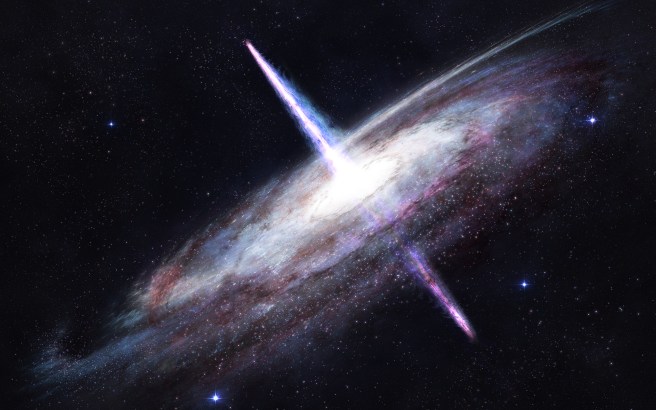 Trying to understand the shape of the universe is like trying to conceptualize how infinity works for us – it makes most people’s heads hurt. Space expands, but expands inside of what? The best we can conceptualize our own universe as is a balloon with dots on it, or as a sphere of raisin bread. The best we can think of to describe our universe is as a sphere, since spacetime is curved and follows the geometry of the surface of a sphere. A sphere, like the globe, has no edge, but it is bounded; it has a definite area. The universe has no edge and it is boundless. Our models are insufficient right now, since the scales of distance are so large, and there is less that we can observe and falsify.
 A Piece, of the Sky
You must be logged in to post a comment.