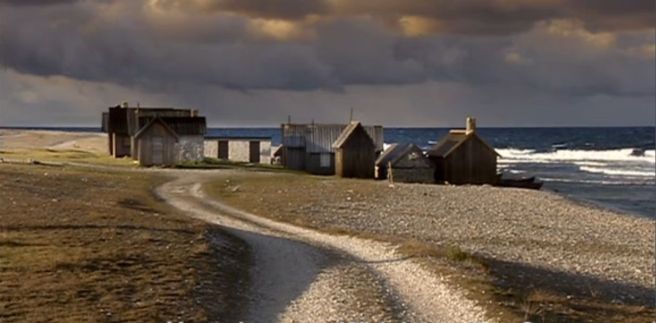
The Long Tomorrow

and if i leave

Ran held herself inside. She imagined hooks against skies of gray, black hooks, interlocking, pulling away from each other, like curled, intertwined fingers, or chains, holding together and rising out of slate-colored dust, holding on to a black monolith pointing toward the sky. She felt the links, invincible, lock and tighten, every little beaten piece of metal straining. She was straining, compacting, crumbling down. She was trying to stuff this down, slather it, and shape it into a sleek black or gray block of matter, like a block of garbage at the dump. But all of it kept slithering away from her, like slimy mixtures of greasy, forest green liquids seeping out between her fingers.

She was shouting so loud, in her head, that she was afraid someone could hear her. No, maybe, someone could see the thoughts spiking out of her, like jagged spires of black and purple crystals tearing out of the pink vestiges of her skin, wrapped tightly and futilely around a geological mass she could barely hold in. Or maybe, they could see her thoughts oozing out of her pores, like mustard-colored pus. But they couldn’t. They couldn’t see or hear how she felt.

Here she was, running all over herself, just begging for them to see. She blamed herself. But her face was an immobile piece of china, shaped into a neutral expression. This had never happened to anyone she knew. She’d only heard about it. Polycystic ovaries. Somehow it was her fault. It was all seeping out of her, a river of black gunk, flowing over the deck and leaving a black ribbon behind the ship.

Why were they going back to the Caribbean? To try again? To get the feeling back, under mango and breadfruit trees? To forget, in a land with dark hills and paths of red dirt with little stones that would get into her tennis shoes and cut her toes open? For what? Maybe, Alli sensed that something was amiss. She couldn’t stand her. Alli couldn’t stand to look at her, Ran thought. The chains tightened and jangled like they would pop.

“Calm down,” a part of her thought. But she raged inside her head. Always thinking, never doing. Always standing there, slack-jawed, arms swinging – when the doctor came to her and said those garbled words – always standing there, helpless! It was being done to her again. She stood there passively. Somehow it was her fault. “She has a cyst? That can’t be right,” she must have said. “Go back and check again,” she must have thought. But there was nothing they could do about it. The spikes grew sharper, driving their way out of her skull, forming a fuzzy purple halo. She had stood there helpless.

“What could you do?” her guru Briana had said, “It isn’t your fault.” But what did she know? What pain did she go home to nurse? Ran kept picking at it, probing it with her tongue, trying to flip it over and see the raw dermis underneath. Her stomach was roiling but she was still at the rail. Nothing would stay down anyway. Sweat covered everything. There she was on this cruise ship, the Queen Victoria, helpless. Navy-blue water, right off the brochure, stretched all around. She could get little pink umbrellas with her drinks. Ran was crumbling, crumbling inside – little gray specks of clay and rubbish fell off that compacted block inside.

“How do you keep such pain hidden away in your heart, like a black slug under a stone?” the guru had asked her. Pain from what? She didn’t know. Or she did, and she didn’t want to know. Flames of rage fanned out of her, like tongues of a peat bog fire sparkling, leaping in a hole. She didn’t know why. It just came out. She could bite her tongue until she tasted the salt of blood, but the heat of her fire would puff, in her belly. Somehow it was her fault. That unconfirmed, irrational fact, sat like a slug, like a stone, in her belly.

She couldn’t let Alli brood. She couldn’t sink waist-deep, in self-pity. She had to keep reminding herself that for however bad she felt, Alli was feeling ten times worse. But she couldn’t imagine feeling any worse than she did now. But she should go talk to her. Ran had the best understanding of how Alli was feeling. They were both going through this together. Her dry tongue slid over her teeth; she couldn’t find the words. The dry heat licked her belly. Do something. Stop thinking. Nothing but a dreamer after all.

“A drink, ma’am?” a waiter asked. Ran’s thirst clicked behind her teeth. “I don’t drink, I apologize,” Ran said. The waiter moved on and she stared back out into the night in silence. The moon hung over the water, dropping its moonbeams lazily into the ocean for the fish to twitch around in. There was much more to her than this – her current marketing firm, self-owned. But what if she had failed already? The chain links clinked.

She hadn’t known what to say. All she felt was soreness and a great desire to keep sleeping under the covers. Every time, she’d wake up, look at the red digital numbers and roll over. What to do? What to do next? Nothing but a dreamer after all. She wanted to roll over and not be bothered.

Banging around in her, clanking and scratching away at her cellophane skin was an odious black, twisted form, all arms and legs, with no head, trying to dig its way out. But no matter what, she could not vomit it out; she could not spew forth this poisonous lump – so it hung there in her belly, like a hollow, pockmarked, abscess-filled tumor, its black seepage trickling out of her pores. She could not give birth to it.

“I want you to remember the last time you were happy,” her guru had said to her, “Squeeze it out. Grab hold of it. Hold it in your hands. You’re there.” Ran imagined herself splashing in cool, iridescent water that broke, like tessellated glass, all around her, as she clawed at the air, looking for the lifesaver.

They had the requisite two careers, and a house in a ‘good’ neighborhood. Alli was staring at a wall in the cabin. Ran could go in there and do the right thing, talk to her. But the black, rusty hook rooted to the bottom of her stomach said ‘no,’ anchoring her there. Easier not to do anything. Roll over. Go to sleep. Easier not to do anything. A blank life stretched out in front of her, like the dark sea.

Ran wanted happiness and love, not this clear, mushy feeling that broke up and slipped through her hands. How far away was the shore?

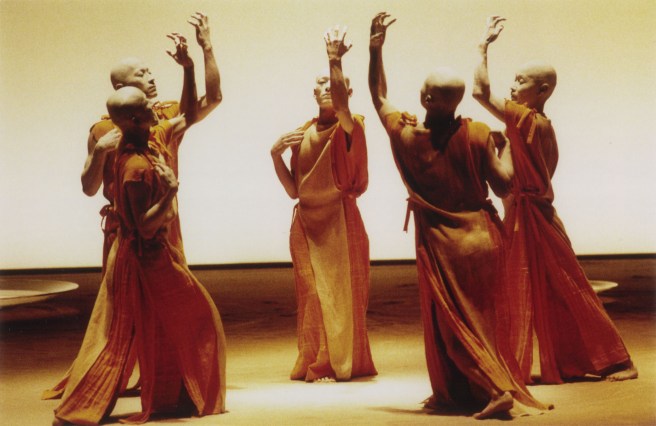
better places

A Donation of Sense

hibiki_saka_gunbu2

An instance of denotation, manifestation and signification failing to support sense, is Alice losing her name.[1a] Alice loses the name that denotes and signifies her. Hence, sense is separated from the three dimensions of proposition. There is a regressive denoting of further senses.[2a]  From Latin, and later, French – doner, donnes – comes the English word, “donate.” We are donated the “givens” in a problem. [3a] The problem preexists the answer. Alea, a game of chance,[4a] runs on lack and excess. There are no Ideal Forms, only forms, casts, events – points, sets, series, pips on a die. You have sets and series, with lack and excess moving between two sets.

In an identity, x = x. Sets hold various identities, including limits and singularities, placeholders, like zero. A singularity is a point or a non-point, like the eye of a storm or the center of a whorl of hair. In physics, black holes are singularities, rips in space-time. You could say singularities are points of pure becoming. A singularity is another point in a set; a point has zero dimensions.[1] Humpty Dumpty, an egg, has no organs; he is made of singularities instead. He lacks identity.

In losing her name, Alice gives off her incorporeal double. Doubles involve two entities going in two directions and good sense. There are the doubles, Tweedle-dee and Tweedledum, the Hare and the Hatter, but also the liminal in between. We have the Stoics’ Chrysippus effect and the law of the excluded middle, the infinite set, the limit and the convergence toward a limit. In the present, is the event, a point connecting to the infinite line of Aion, the ideal game, a line on a flat surface, the width, a frontier. The zero, the empty space, a floating signifier, is the ‘something,’ the aliquid, between the two sets. This given, in the problem preexisting answers, is the doner, the donation, between the two sets. Sense is that donation, the given – ‘that’s a given.’

Sense is the empty square between the two sets, the two series. Lack and excess define the two series, and the singularity is the event that provides coordination between the two sets. There are two sets, the signified and the signifying.

In the opposition between the surface and depths, the surface, the membrane between bodies and words, things and propositions, begins to break down and have holes. The body is a cavity with a broken surface; it is porous, with little holes. If there were no separation between propositions and things, words would enter bodies. Of course, this is not the case. In the world of depth, bodies are penetrated by other bodies, mixtures – this is a wound. On the other side, in a separate set, is sense, the event, an incorporeal effect, a surface effect. The surface effect, the pure ideal game is set apart; words are set aside from bodies.[2]

There is also the organism without organs, a body without organs, an egg, like Humpty Dumpty, or an embryo with undifferentiated organs, or a zygote with poles of cells, thresholds of potential. On the zygote are the animal and vegetative poles, active and passive poles of cells. The egg and Humpty Dumpty are points, singularities. They take in both sets of aspects – that of bodies but also skins, peelings, surface effects, events, sense – a body but a body without smaller, internal bodies, encased in membranes: a body without organs.

In the egg, this body without organs, there is no surface, no frontier, no difference or differentiation. The fish become a part of the sea, thus alluding to Humpty Dumpty’s poem including fish.[3] Are the fish apart of the sea or are they separate bodies? In this body without organs, between surface and depth, words enter bodies. Fire, water and air, classical elements, combine. Body and words become one – a strange amalgamation, like the portmanteau word.

Hecate is the goddess of the crossroads, the liminal and facing three ways. Circe, is an expression of Hecate, who is also the goddess of the moon. Circe turned the lotus eaters into pigs, a moment of pure becoming. There are lost pigs and other animals on Peter Pan’s island. Hecate and the nocturnal, connect to seemingly nonsense words: “lost pigs of the moon.”[4] Water and fire, classical elements, combine again. The combination of opposites points to the duality of the body: the fragmented body with separate organs and the body without organs. Peter Pan releases his shadow; both Peter Pan and Alice release their incorporeal doubles.

There is a difference between the nonsense of the surface and the two series, and the nonsense below sense and the surface, the nonsense of the depths, when the two series collapse into one. Sense slides along the surface width, between the two sets of signified and signifying. Meanwhile, there is no surface or difference between continuous bodies surrounded by their surface membranes, only depth. The lotus eaters are the nexus, the connection, between pigs and eating. Eating entails a digestive track from end to end, a tube, a hole, a tunnel, a surface of epithelium, running through the body, continuous with its surface; skin on the outside and the meeting of internal and external, inside and outside – one giant surface, running through a depth.[5]

Sense is the bi-directional line, like Aion, the divider between language and the body, protecting the body from language – when words pierce bodies, a wounding. Sense is the barrier, the mirror, keeping words, the incorporeal, proper names – and the body, bodies, the depths, separate. Sense is a singularity, an empty square, a supernumerary zero, moving between the two series of propositions and things, eating and speaking. There are two series, the body versus language and words.

Telescoping, Aion and Alice are unfolding, along an infinite line. Common sense, identity, is being eroded. The body goes back to being an egg, an undifferentiated body without organs. Doubles and doppelgangers appear in tandem – Hatter, Hare; Tweedle-dee, Tweedledum. The nonsense of depth is pitted against the nonsense of the surface.[6] The nonsense of depth, is corporeal; there is no surface or frontier – words pierce bodies and wound them. The surface collapses, pierced with many holes; it is porous.

The nonsense of the surface is the logic of sense, language, the incorporeal, the surface, the dividing line between the two series of language and bodies. The surface is like the surface of a body of water – it is easily pierced. Bodies pierce mixtures, producing surface effects, ripples. Sense is produced on the surface; when the surface collapses, sense collapses.

Sense is produced at the intersection of identity and direction. Sense doesn’t say its own sense – like nonsense – it further denotes in a serialization: n1, n2, n3; infinite regression, eternal return. Sense is the surface between words and bodies. A surface and the liminal space before it, are indivisible; they are two sides to one whole, like two-faced Janus: a double causality. There are two forms: the general and the individual, two perspectives,[7] surface versus depth. There are two series of singularities, with empty square and esoteric words, circulating between objects and words, bodies and language, signified and signifying.

Faro

[1a] The Logic of Sense, 18.

[2a] Ibid 31.

[3a] Ibid 55.

[4a] Ibid 58.

[1] Ibid. 80.

[2] Ibid 87.

[3] Ibid 89.

[4] Ibid 90.

[5] Ibid 91

[6] Ibid 92.

[7] Ibid 99.